
Every Algerian CEO has heard the AI pitch by now. The PowerPoint slides are identical — the same generative-AI promise, the same talk of "transformation", the same vendor with no production references in the country. After eighteen months of building real systems for real customers in Algiers, Oran, Constantine, and Sétif, we have a clearer view of where AI works in the Algerian market and where it still does not.
This brief is the unsentimental version. No hype, no name-dropping, no consulting deck. Five use cases we have shipped and watched run in production for at least six months — and five we have explicitly walked away from when a client asked.
The five that ship
The use cases that work in Algeria today share three traits: they sit on top of existing operational data, they replace a task that is already manual and expensive, and they survive a power cut. Anything that requires perfect connectivity, perfect data, or perfect user adoption tends to die in pilot.
Document intelligence — invoices, customs declarations, medical records, contracts — has been the runaway winner. Arabic and French OCR with structured extraction works well enough that companies are moving entire back-office workflows onto it. The ROI is visible in the first month because the alternative is an army of clerks.
Forecasting and inventory optimization is the second cluster. Algerian distributors and retailers run on tight margins and chronic stock-outs. A model trained on two years of sales history beats spreadsheet planning every time, and the integration cost is small compared to the cash-flow improvement.
Where the line is
The split between what works and what does not is not technical — it is operational. Production AI in Algeria fails for the same reasons production software fails: bad data, no clear owner, and no plan for the day after launch.

The five we walk away from
We turn down work that we know will not survive contact with reality. End-to-end conversational agents replacing human customer support is the first one. The Darija and Algerian-French code-switching is hard, and the consequences of being wrong on a billing question are real. We build narrower assistants instead — a bot that can read an invoice and route it, not one pretending to be a person.
The second category is "predictive analytics" sold without a target metric. If a client cannot tell us what decision the prediction will change, the project will die in production no matter how good the model is. The model is the easy part.
The third is anything that depends on integrating with a legacy ministry system that has no API and no documentation. We have learned to scope those engagements as data-extraction projects first and AI projects second.
Industrial AI is the underrated story
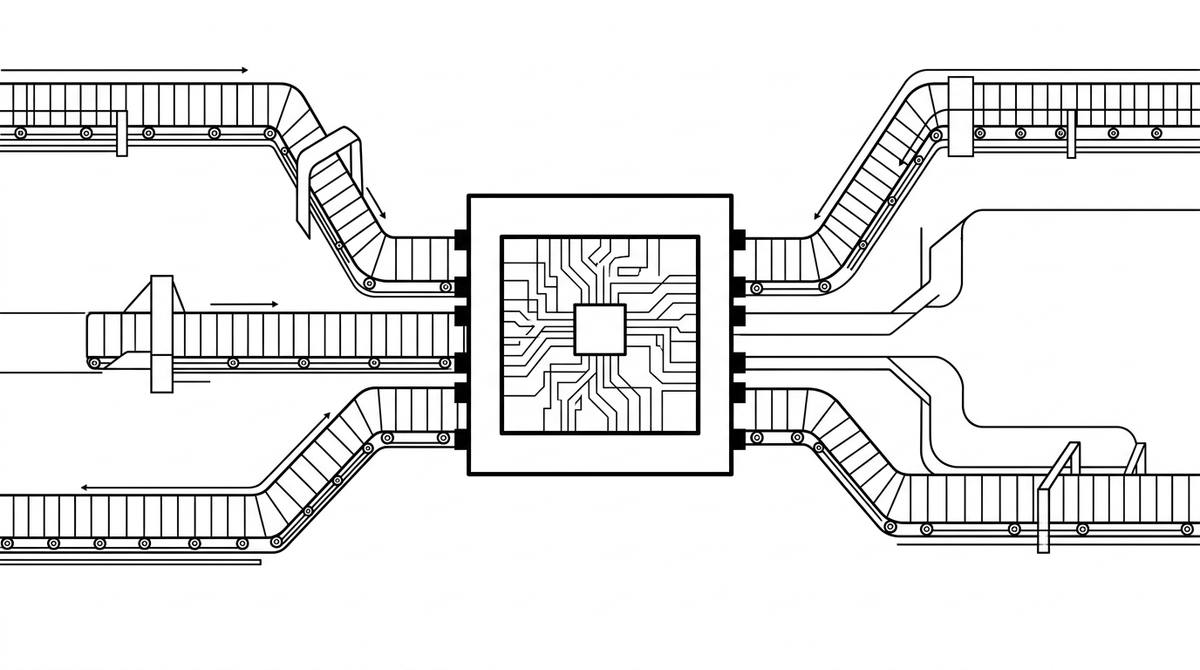
The headline noise is all about generative AI and chatbots. The actual revenue in the Algerian market is in computer vision on factory floors and predictive maintenance on industrial machinery. Cement plants, food processing lines, oil and gas equipment — the units of value here are measured in hours of unplanned downtime avoided, not in tokens generated.
These projects are quieter, less press-friendly, and harder to sell. They also have the cleanest ROI we have seen and the longest contract durations.
What to do in the next twelve months
If you run a mid-sized Algerian business and have not yet started: pick one bottleneck that costs you more than five million dinars per year and is currently solved by humans doing repetitive document work. Start there. Do not start with a chatbot. Do not start with generative AI as a category. Start with one expensive, repetitive workflow.
If you have already started and have a stalled pilot: the issue is almost certainly not the model. It is the integration, the data quality, or the absence of a single accountable owner. Audit those three before you replace the model.